
Why Thanksgiving Is More Complicated? Thanksgiving feels celebratory on the surface — family, food, gratitude. But its history is more layered than the elementary-school narrative suggests.
The 1621 harvest meal between Pilgrims and Wampanoag people wasn’t a peaceful, recurring tradition; it was a single, politically complex event. Within decades, those same colonists were engaged in devastating wars against Native nations.
The holiday itself wasn’t federally standardized until 1863, when Lincoln used it to promote national unity during the Civil War — a political act, not a historical commemoration.
Many Native Americans observe the fourth Thursday of November as a National Day of Mourning — a reminder that one group’s founding story is another’s tragedy.
Table of Contents
Quick Table
| The simple story | The complicated reality | Category |
|---|---|---|
| Pilgrims and Native Americans shared a peaceful feast in 1621 | The Wampanoag attended armed, unsure if it was a threat. Relations collapsed into war within 50 years. | History |
| It’s been celebrated since 1621 | There was no consistent annual holiday. Lincoln declared a national Thanksgiving in 1863 — partly as a wartime unity move. | Origins |
| The date has always been the 4th Thursday | FDR moved it one week earlier in 1939 to extend holiday shopping. Congress finally fixed it in 1941. | Calendar |
| Turkey has always been the centerpiece | The 1621 feast likely featured venison, fish, and shellfish. Turkey as the symbol came much later via 19th-century tradition. | Food |
| It’s a uniquely American holiday | Canada has its own Thanksgiving (second Monday of October). Several other countries have harvest festivals with similar themes. | Culture |
| It’s a day of gratitude for all Americans | Many Native Americans observe it as a National Day of Mourning, marking colonization and its consequences. | Perspective |
| The Mayflower story is the founding myth | Spanish settlers in Florida held a Thanksgiving meal with the Seloy people in 1565 — 56 years earlier. | History |
Why Thanksgiving Is More Complicated?
I’ll be honest — there was a time when Thanksgiving was my favorite holiday of the year. No gifts to buy, no pressure to decorate the whole house, just food, football, and a four-day weekend. I was completely on board.
Then, one year at the dinner table, my niece — she was maybe thirteen — looked up from her plate and asked, “Wait, so we’re celebrating the Pilgrims?
The same people who…” and she just trailed off, because she couldn’t quite put the words together. And honestly? Neither could I.
That question stuck with me. I went home and started reading, and what I found wasn’t just uncomfortable — it genuinely changed how I look at the holiday.
Not in a “cancel everything” kind of way. More like, “we really need to talk about this more honestly” kind of way.
So here’s what I’ve learned, what I’ve observed over years of Thanksgiving dinners, and why I think the holiday — as we currently celebrate it — has some real, serious problems worth discussing.
The History We Were Taught Is… a Lot Softer Than Reality
Most of us grew up with the same basic story: Pilgrims land at Plymouth, have a hard winter, the Wampanoag people help them survive, and then they all sit down together for a big harvest feast.
Friendship. Gratitude. The end.
The actual historical record is significantly darker. The relationship between the Pilgrims and Indigenous people deteriorated badly within a generation.
The Wampanoag, led at the time of that 1621 harvest feast by Massasoit, were already a people devastated by disease brought by earlier.
European contact — some estimates suggest up to 90% of coastal New England Indigenous populations had died in the decade before the Pilgrims arrived.
Within fifty years of that meal, Massasoit’s own son, Metacom (known to colonists as “King Philip”), was fighting a brutal war against.
English settlers — a war he lost, and which effectively destroyed the Wampanoag as a political nation. His head was displayed on a spike in Plymouth for twenty years.
That context doesn’t make it into the pilgrim hats and paper turkeys we make in elementary school. And that gap between the myth and the reality is, I think, genuinely worth acknowledging.
“The holiday as most Americans celebrate it is built on a version of history that was deliberately sanitized — and the people it glosses over are still here, still pointing that out.”
The Wampanoag Nation actually designates Thanksgiving as a National Day of Mourning. They’ve held a counter-demonstration at Plymouth Rock since 1970.
This isn’t a fringe position — it’s a perspective from the people who were actually at that table.
The Food Waste Problem Is Genuinely Staggering
Set aside the history for a second. Even if you’re not moved by the historical critique, the sheer environmental footprint of Thanksgiving in the U.S. is hard to ignore.
46M
Turkeys consumed on Thanksgiving
305M
lbs of food wasted on Thanksgiving Day
$1B+
Estimated value of food thrown away
I’ve been guilty of this myself. I once made enough mashed potatoes to feed a small apartment building because I panicked and doubled the recipe. Half of it went in the bin. It felt terrible.
The turkey situation is particularly rough from an environmental and ethical standpoint.
Modern commercial turkeys have been bred so aggressively for breast meat that many can’t even mate naturally or walk properly.
They spend their lives in overcrowded conditions, and they’re slaughtered by the tens of millions in a single week. If you care about animal welfare at all — even a little — that’s hard to look at squarely.
The Family Stress Is Real — And Often Ignored
Here’s one nobody wants to say out loud at the dinner table: Thanksgiving is genuinely hard for a lot of people.
For anyone who’s lost a family member, who has estranged relatives, who’s hiding their relationship or their job situation, who deals with a family member who says something awful every single year without fail — Thanksgiving isn’t a warm Norman Rockwell painting. It’s a high-pressure, obligatory event with no easy exit.
Real talk
The American Psychological Association consistently reports that the holiday season is one of the most stressful times of year for adults — and Thanksgiving kicks it all off.
Loneliness spikes. Alcohol consumption rises. Emergency rooms see more domestic incidents.
I’ve sat at tables where someone made a comment about someone’s weight.
Where political arguments derailed the whole meal. Where someone cried in the bathroom and pretended everything was fine when they came back out. That’s not rare — that’s a lot of Thanksgivings for a lot of people.
We don’t talk about this enough because the cultural script says you’re supposed to be grateful and happy. Admitting that the holiday is hard feels like admitting you’re doing family wrong.
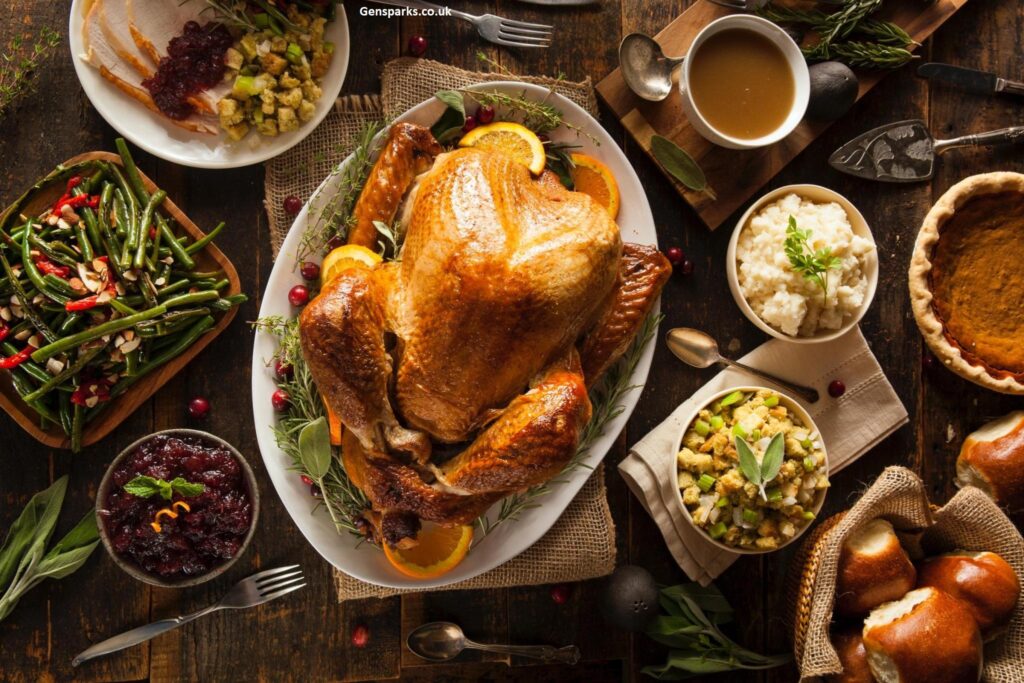
Black Friday Ate the Holiday
There’s also just the pure commercial rot that’s crept in. Thanksgiving used to be a genuine pause — a day where things were closed, you stayed home, and you had an excuse to do nothing.
Now? Retailers start “Black Friday” sales on Thursday afternoon. People leave the dinner table early to go stand in lines.
The holiday has essentially been turned into the opening ceremony for Christmas shopping season.
I remember when stores being open on Thanksgiving was scandalous. It was front-page news. Now it barely gets mentioned.
The workers at those stores — many of whom are already underpaid and overworked — don’t get to enjoy the holiday that the rest of us are supposedly celebrating.
So What Do We Actually Do With This?
Look, I’m not here to tell anyone to cancel Thanksgiving. That’s not really the point, and frankly, it’s not going to happen. But I do think there are some honest steps worth taking if you want to engage with the holiday more thoughtfully.
Learn the actual history. The Wampanoag Tribe of Gay Head (Aquinnah) has a website. The Smithsonian’s National Museum of the American Indian has extensive resources. Spending thirty minutes reading something other than the Pilgrim myth before the holiday is a genuinely useful thing to do — especially if you have kids at the table.
Think about scale. You do not need as much food as you think you need. Make a plan for leftovers before you cook, not after. If your family always wastes most of the meal, make less. It feels weird the first time and then completely normal after.
Give yourself permission to opt out of parts of it. Don’t want to do the big family dinner this year? That’s valid. Want to spend it quietly, or volunteering, or doing something completely different? Also valid. The holiday doesn’t require a specific format.
If you do gather, make space for honesty. You don’t have to turn Thanksgiving into a history lecture. But you also don’t have to pretend the official story is complete. A simple acknowledgment — “this land belongs to the Wampanoag people” — before a meal is something many families are starting to do. It doesn’t ruin anything. It actually adds a layer of meaning.
Gratitude Itself Isn’t the Problem
Here’s the thing I want to be clear about: gratitude is good. Taking time to appreciate what you have, to gather with people you care about, to eat a real meal together — none of that is bad. In fact, those are things we probably don’t do enough of.
The problem isn’t the concept of gratitude. It’s the specific mythology we’ve wrapped around it, the waste we’ve normalized, and the discomfort we’ve decided to look past because it’s easier that way.
My niece’s question at that table years ago wasn’t a buzzkill. It was actually the most Thanksgiving-appropriate thing that happened all day — she was paying attention, asking questions, trying to understand what we were actually doing and why.
That seems like the right spirit to me. Not canceling the holiday. Not pretending it’s perfect. Just being honest enough to look at it clearly — the good parts and the parts we’ve been avoiding.
The turkey will taste the same either way. But knowing what you’re actually celebrating? That’s worth something.
FAQ’s
When did Thanksgiving actually become an official holiday?
President Abraham Lincoln declared Thanksgiving a national holiday in 1863, during the Civil War. He was partly motivated by a decades-long campaign by writer Sarah Josepha Hale and partly by a desire to unite a divided nation. Before that, individual states and presidents occasionally proclaimed thanksgiving days, but there was no fixed annual observance.
Were the Pilgrims and Wampanoag really friends at the 1621 feast?
It’s more complicated than “friends.” The Wampanoag, led by Massasoit, arrived at the gathering with around 90 armed men — likely to assess whether the colonists posed a threat, or to honor a fragile alliance. The relationship was one of mutual convenience, not warmth. Within 50 years, the two sides fought King Philip’s War, one of the deadliest conflicts in colonial American history.
Why do some people consider Thanksgiving a day of mourning?
Many Native Americans, particularly members of the Wampanoag Nation and other tribes, observe the National Day of Mourning on the same day. For them, Thanksgiving represents the beginning of colonization, displacement, and the destruction of Indigenous cultures and peoples — not a story of peaceful coexistence worth celebrating.
Did the Pilgrims really invent Thanksgiving?
No. Spanish explorers held a Thanksgiving feast with the Seloy people in present-day Florida in 1565 — more than 50 years before the Mayflower landed. Various Indigenous peoples also held harvest ceremonies long before any European arrived. The “Pilgrims invented it” narrative is largely a 19th-century myth built around national identity.
Why is the turkey the symbol of Thanksgiving?
Surprisingly, turkey was not a centerpiece of the 1621 meal — historians believe venison, fish, and shellfish were far more prominent. Turkey became the symbol gradually through 19th-century culture, particularly through Sarah Josepha Hale’s writings and the practicality of raising large birds for a big annual feast. By the time the holiday was formalized, the turkey was already baked into the tradition.
Conclusion
Thanksgiving is one of America’s most beloved holidays — and also one of its most misunderstood.
The story most of us grew up with, of Pilgrims and Native Americans sitting down in peaceful gratitude, is a comforting myth that smooths over a far messier reality.
The 1621 harvest gathering was real, but it was tense, politically motivated, and followed by decades of conflict that nearly erased the Wampanoag people entirely.
That doesn’t mean the holiday has no value. Gratitude, family, and community are worth celebrating. But those things are made richer, not poorer, by honesty.
Understanding what Thanksgiving actually represents — including what it means to the people whose ancestors were displaced by the world it helped build — doesn’t cancel the holiday. It deepens it.
The best way to honor a complicated history is not to simplify it, but to hold its contradictions with honesty and care.
Thanksgiving can be both a time to gather around the table and a moment to reckon with the past. In fact, it probably should be both.
That kind of honest remembrance is, in its own way, the most genuinely grateful thing we can do.