


Why Do Balloons Pop on Grass? Balloons pop on grass because grass blades are sharp. Each individual blade has a pointed tip and rigid edges that act like tiny needles.
When a balloon presses against grass with enough force, those sharp points concentrate pressure onto a very small area of the latex surface — puncturing it instantly.
Latex balloons are thin and highly stretched, making them especially vulnerable. The tension in the balloon’s skin means even the slightest puncture causes a rapid, dramatic burst.
This is the same reason balloons pop on thorns, rough concrete, or anything with a sharp edge — concentrated pressure always wins against stretched latex.
Table of Contents
Quick Table
| Factor | What happens | Why it causes a pop | Risk level |
|---|---|---|---|
| Sharp grass blade tips | Pointed tips press into the balloon surface | Concentrates force onto a tiny area, piercing latex | High |
| Latex tension | Balloon skin is stretched extremely thin | Any puncture causes instant, rapid bursting | High |
| Balloon pressure | Inflated air pushes outward against the surface | Increases force on the contact point with grass | High |
| Grass blade rigidity | Blades are stiff enough to resist bending | Does not flex away — holds its point against balloon | Medium |
| Balloon size | Larger balloons have more surface tension | More stretched latex = easier to puncture | Medium |
| Dry or dead grass | Dried blades are sharper and more brittle | Higher chance of puncture than soft, wet grass | Medium |
| Balloon material | Foil balloons resist puncture better than latex | Thicker material withstands grass blade pressure | Low |
Why Do Balloons Pop on Grass?
It was supposed to be a simple backyard birthday setup. Thirty colorful balloons, a sunny afternoon, and a bunch of six-year-olds ready to run wild.
I’d spent a solid hour blowing them up (yes, manually — I didn’t own a pump yet, rookie mistake), tied them to little stakes in the grass, and stood back feeling pretty proud of myself.
By the time the guests arrived twenty minutes later, seven of them had already popped.
That afternoon sent me down a rabbit hole I never expected. Why on earth does grass pop balloons so easily?
It sounds almost silly as a question, but once you dig into it, there’s actually some genuinely interesting science going on — and a bunch of practical stuff you can do to stop it from ruining your next outdoor event.
It’s Not Really the Grass — It’s What’s IN the Grass
Here’s the thing I got completely wrong at first. I assumed the balloon was just rubbing against the grass blades and eventually wearing thin. Like friction was the villain here.
Nope.
The real culprit is the sharp, hidden stuff living at the base of most lawns. We’re talking about:
- Dried grass stems — when grass gets cut, it leaves behind stiff, pointed little stalks that are basically microscopic spears
- Twigs and seed pods — especially in late summer and fall, lawns are littered with tiny sharp debris you can’t even see
- Rocks and gravel — even a single pea-sized rock hiding under a blade of grass can do the job
- Thorns and bramble bits — if you have any weeds, wild clover, or shrubs nearby, bits of these constantly shed into the lawn
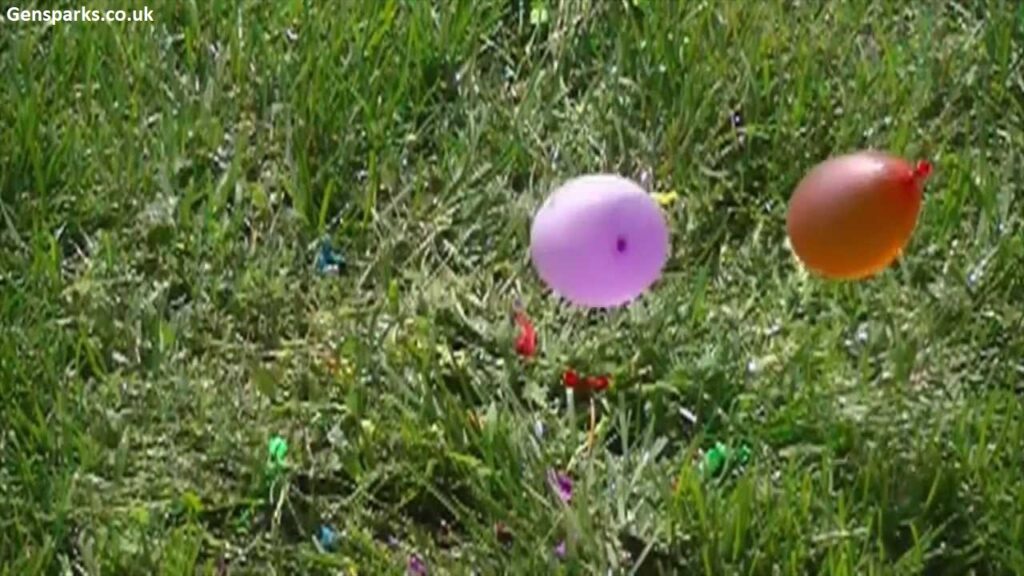
When a balloon settles against the ground — especially a latex one — it doesn’t sit there peacefully. Wind makes it shift. Gravity pulls it down.
A child runs past and creates a little air current. The balloon moves, and eventually it finds that one sharp little stem, and pop.
I confirmed this myself after that birthday disaster. I went out the next day and got on my hands and knees with a flashlight and really looked at my grass.
There were dozens of tiny sharp points just in one square foot. I’d never noticed them before because you’re not usually thinking about it.
Why Latex Balloons Are Especially Vulnerable
Not all balloons are created equal. The standard latex balloons you buy in bags at the dollar store or party supply shops are thin, stretchy, and under a surprising amount of internal pressure.
Think about it — when you blow up a balloon and tie it off, you’re basically creating a tight rubber skin trying to hold back air that desperately wants out.
The tension in that rubber is significant. It doesn’t take much to give that air the escape route it’s looking for.
Mylar (foil) balloons are a different story. They’re much more resistant to puncture because the material is thicker and more rigid. You’ll notice that foil balloons survive outdoor events a lot better than latex ones — though they’re not completely immune.
The other factor? Temperature. On a hot day, the air inside a latex balloon expands. The rubber gets thinner as it stretches further.
This is why you’ll hear that classic advice to not fully inflate balloons if you’re heading somewhere warm — leaving a little room for expansion genuinely helps.
The Pressure Situation Is Worse Than You Think
Here’s something that surprised me when I looked into it: a fully inflated latex balloon has internal pressure significantly higher than the air around it. That’s why it feels firm when you squeeze it.
This means the rubber is already stretched close to its limit. Any puncture — no matter how tiny — immediately becomes a catastrophic failure because the pressure difference snaps the hole open instantly. That’s what makes the pop sound: it’s not a slow leak, it’s a rapid, explosive release.
So when a sharp grass stem pokes even a pinhole into a fully inflated balloon, the game is over in milliseconds.

What Actually Works to Prevent It
After my backyard disaster, I tested a bunch of approaches. Here’s what genuinely helped:
Keep Balloons Off the Ground
This sounds obvious but it needs to be deliberate. Don’t just set balloons near the ground — make sure they’re actually elevated. Use:
- Balloon weights (those little foil pouches filled with sand or beads)
- Sticks or dowels pushed into the ground with the balloon tied high enough that it floats upward
- Attach them to tables, fences, or a balloon arch stand
The goal is to keep that rubber skin from ever making contact with the ground surface.
Lay Down a Blanket or Tarp First
If you absolutely need balloons near ground level — like for a balloon pit or a ground display — lay a smooth blanket, plastic tarp, or foam play mat underneath. This eliminates the sharp debris problem entirely.
I did this at my daughter’s second birthday party and had zero popped balloons during the whole event. It was a game changer.
Don’t Over-Inflate
Leave about 10–15% of the balloon’s maximum capacity unfilled. It’ll look slightly less round and full, but it’ll have a lot more resistance to popping. The rubber has a bit of give left, so when it contacts something sharp, it can flex instead of immediately rupturing.
A pump makes this way easier to control than blowing by mouth — I now use a simple hand pump from Amazon that cost about $8. Worth every penny.
Use Thicker or Specialty Balloons
For outdoor events, look for 11-inch professional-grade latex balloons (like the ones from Qualatex or Pioneer Balloon Company).
They’re noticeably thicker than budget bags of balloons. Not immune to popping, but meaningfully tougher.
Alternatively, if your event allows for it, use foil/mylar balloons outdoors. They’re much more durable on grass.
Mow and Inspect the Lawn First
If you know you’re hosting an outdoor event, mow the grass a day or two beforehand (not right before — freshly cut grass has the sharpest stems). Then walk the area and rake up any debris, sticks, seed pods, or rocks.
It sounds like a lot of effort, but it takes maybe 15 minutes and makes a noticeable difference.
Set Up Balloons Last
Don’t inflate and place balloons hours before guests arrive.
The longer they sit there exposed to the elements, sun, wind, and grass contact, the higher the chance of popping. Blow them up 30–45 minutes before showtime.
The Wind Factor Nobody Talks About
Something I didn’t fully account with my first outdoor balloon setup: wind turns stationary balloons into moving targets on the ground.
Even a light breeze causes a balloon resting near or on grass to roll, drag, and shift. Every movement is another chance to find a sharp stem.
I had one event where I used heavier balloon weights thinking that would solve it — and the balloons were still popping because the wind was pushing them sideways into the grass while the weight kept them anchored low.
The fix? In windy conditions, raise your balloons higher and use longer ribbons so they float well above the ground surface.
Or cluster them together using a balloon column or arch — grouped balloons hold each other up and create less individual surface contact with the ground.
Common Mistakes That Make It Worse
A few things I’ve seen (and done myself) that almost guarantee popped balloons:
Using old balloons. Latex degrades over time. Old balloons from a bag that’s been sitting in a drawer for a year are already brittle and far more likely to pop. Always use fresh stock.
Inflating in a warm car and then taking them outside. The temperature change causes rapid pressure changes. Your balloon might survive the ride, but it’ll be at max stress by the time you pull it out.
Rubbing balloons against anything rough. Even brick walls, rough fence posts, or textured surfaces can weaken the latex before you even place them near grass.
Putting balloons directly on a cement or gravel path. People sometimes think this is safer than grass. It’s usually worse, because concrete and gravel are full of tiny abrasive particles.
A Few Things I Still Don’t Fully Get
Even after all my trial and error, there are a couple of things that still catch me off guard.
Sometimes a balloon will sit on the exact same patch of grass for an hour without popping, while another one pops in two minutes.
The randomness is real — it genuinely depends on exactly where the balloon settles and whether it finds a sharp point or not. It’s statistical more than predictable.
Also, I’ve noticed that darker-colored balloons seem to pop faster on hot days than lighter ones. My working theory is that darker latex absorbs more heat, which accelerates the expansion.
I haven’t seen this definitively proven anywhere, but I’ve observed it enough times that I avoid putting dark balloons in direct sunlight now.
So What’s the Takeaway?
If you’re planning an outdoor party or event with balloons, the grass is genuinely something to think through in advance — not just assume will be fine.
The combination of sharp debris hiding in lawn, the internal pressure of latex balloons, and environmental factors like wind and heat creates a surprisingly hostile environment for your decorations.
The good news is that it’s completely manageable.
Elevate your balloons, keep them off direct ground contact, don’t over-inflate, and set up as close to event time as possible. Do those four things and you’ll have a dramatically better survival rate.
My backyard birthday parties have gone from seven balloons popping before guests arrive to maybe one or two during the whole event. That’s a win I’ll take every time.
FAQ’s
Why do balloons pop on grass but not always on smooth surfaces?
Smooth surfaces like floors or tables distribute pressure evenly across the balloon’s skin. Grass blades concentrate pressure into sharp, tiny points — making puncture far more likely with even gentle contact.
Do all types of grass pop balloons equally?
No. Dry, dead, or coarse grass is sharper and more rigid, making it more dangerous for balloons. Soft, freshly watered grass has more flexibility and is less likely to puncture a balloon on light contact.
Why do balloons pop so loudly?
The loud bang comes from the rapid release of compressed air and the sudden snap of stretched latex. The pressure built up inside the balloon escapes all at once, creating a small shockwave that produces the popping sound.
Are foil balloons safer on grass than latex balloons?
Yes. Foil balloons are made from thicker, more puncture-resistant material. They can still be damaged by sharp grass, but they are significantly less vulnerable than thin, highly stretched latex balloons.
Can you prevent a balloon from popping on grass?
Yes. Keep balloons elevated, away from dry or coarse grass. Avoid pressing them directly onto any surface with sharp edges, and opt for thicker foil balloons when outdoors.
Conclusion
It seems like such a simple thing — a balloon landing on grass and suddenly bursting with a sharp bang. But behind that brief moment is a surprisingly interesting combination of physics, material science, and natural design.
Grass blades are not as innocent as they look. Their pointed tips and rigid structure make them remarkably effective at concentrating pressure onto the stretched surface of a latex balloon.
Add the internal air pressure pushing outward and the extreme thinness of the balloon’s skin, and the result is almost inevitable — a sudden, dramatic pop.
Understanding why balloons pop on grass also teaches us something broader about how pressure works. It is never about total force alone — it is about where that force is focused.
A single sharp point can do what a large flat surface cannot, simply because it directs all of its energy into one tiny spot.
For parents planning outdoor parties, event organizers, or anyone who has ever watched a balloon disappear with a bang, this knowledge is genuinely useful.
Choose foil over latex outdoors, keep balloons off dry grass, and elevation is your best friend.