

Why Are Hospitals Always So Cold? You’re not imagining it — hospitals really are colder than most buildings, and it’s intentional.
The primary reason is infection control. Bacteria and viruses thrive in warm, humid environments.
Keeping temperatures low — typically between 60°F and 70°F — slows the growth and spread of pathogens, reducing infection risk for vulnerable patients.
Cold temperatures also help preserve sterility in operating rooms and keep medical staff alert and comfortable during long procedures.
There’s a secondary factor too: heavy equipment generates heat, so cooler ambient air helps regulate room temperatures overall.
It’s not about comfort — it’s about safety. The cold has a purpose.
Quick Table
| Reason | Why It Matters | Where It Applies Most | Benefit |
|---|---|---|---|
| Infection Control | Cold slows bacterial & viral growth | Entire hospital | Reduces infection spread |
| Sterility Preservation | Low temps maintain clean environments | Operating rooms, ICUs | Safer procedures |
| Staff Alertness | Cool air keeps medical staff focused | Surgical suites, ERs | Fewer errors, better performance |
| Equipment Heat Management | Machines generate significant heat | Labs, imaging rooms | Prevents overheating |
| Patient Safety | Reduces risk for immunocompromised patients | All wards | Lower complication rates |
| Humidity Control | Cold air carries less moisture | Throughout hospital | Limits mold & airborne pathogens |
Why Are Hospitals Always So Cold?
I remember the first time I really noticed it. My mom had just gone into surgery, and I was sitting in the waiting room at 7 in the morning, wearing a light jacket over a t-shirt.
Within twenty minutes, I was hunched over, arms crossed, genuinely shivering. A nurse walked by, looked at me, and said — completely unfazed — “Yeah, grab a blanket from that cart. Everyone does.”
That was my introduction to the hospital cold. It’s not like the cold of an air-conditioned office or a supermarket freezer aisle.
It’s a specific, pervasive, slightly eerie chill that seems built into the walls. And ever since that day, I’ve been curious: why on earth do hospitals keep it so cold?
Turns out, there are some genuinely fascinating reasons — and they go way deeper than “someone just set the thermostat too low.”
It’s Not Accidental — It’s Controlled Very Carefully
The first thing you need to understand is that hospital temperature isn’t set by some bored facilities manager who prefers the cold. It’s regulated.
Like, there are actual guidelines from organizations like the American Society of Heating, Refrigerating, and Air-Conditioning Engineers (ASHRAE) and requirements from accreditation bodies like The Joint Commission that hospitals have to follow.
Different areas of a hospital actually have different temperature requirements:
- Operating rooms are typically kept between 65°F and 73°F (18°C–23°C)
- General patient rooms usually sit around 70°F to 75°F (21°C–24°C)
- Recovery rooms and ICUs can go even cooler depending on patient condition
- Waiting areas and hallways often get whatever’s left over from the main HVAC system
So when you’re freezing in a hallway at 68°F while wearing a thin sweater, that’s partially by design — just not design that was optimizing for your comfort specifically.
Bacteria and Viruses Don’t Love the Cold
Here’s the big one that most people don’t think about.
Hospitals are, by definition, full of sick people. And many of the pathogens responsible for hospital-acquired infections (what doctors call “nosocomial infections”) reproduce faster and survive longer in warmer environments.
Bacteria like Staphylococcus aureus — including the nasty antibiotic-resistant MRSA — and various mold spores thrive when conditions are warm and moist.
By keeping the air cooler and dry, hospitals create a less hospitable environment for these microbes to spread.
It’s not a perfect solution, obviously. But it’s one layer of defense in an environment where infection control is life-or-death serious.
Think of it like keeping your refrigerator cold to slow down food spoilage — same principle, higher stakes.
Operating Rooms Have Very Specific Thermal Needs
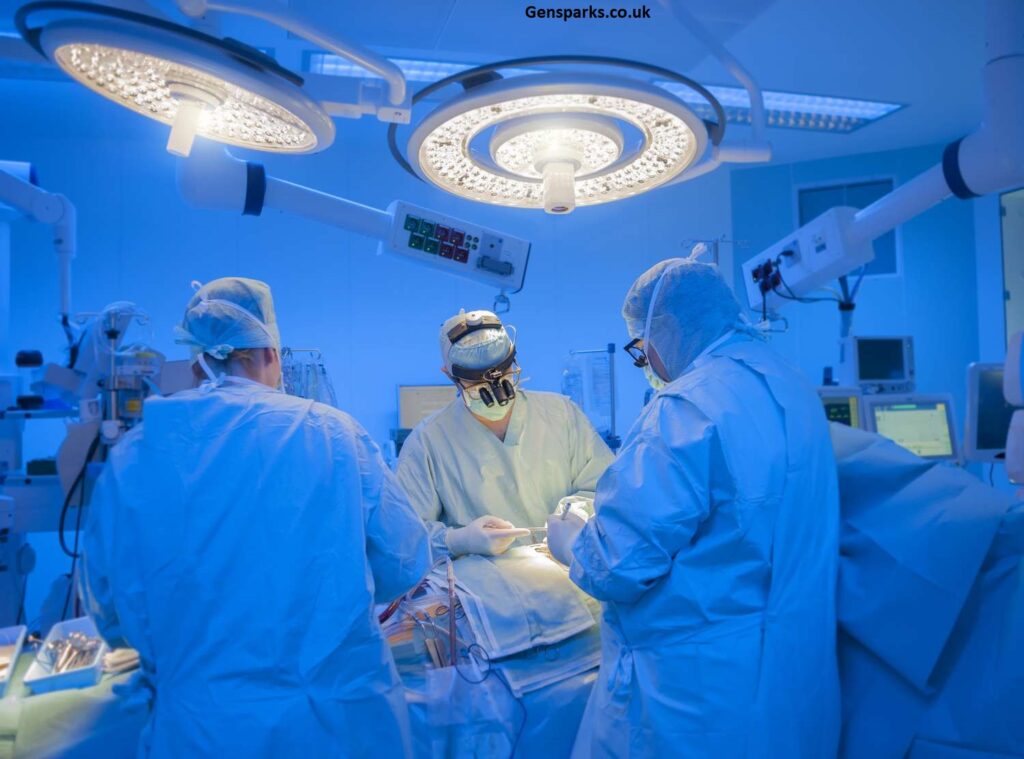
If you’ve ever been near an OR (operating room), you’ve probably noticed it feels almost arctic compared to the rest of the hospital. There’s a legitimate medical reason for that.
Surgeons and OR nurses wear heavy gowns, gloves, masks, and are often working intensely for hours at a stretch.
If the room were kept at a comfortable 72°F, they’d be sweating through their sterile gear within the first hour. That’s not just uncomfortable — it’s a contamination risk. Sweat carries bacteria.
There’s also a patient-side reason: some surgical procedures actually benefit from lower body temperature in the patient.
Mild therapeutic hypothermia can slow metabolism and reduce the body’s oxygen demand, which helps protect tissue during long or complex surgeries.
So the cold in operating areas isn’t just about comfort logistics — it’s serving a real clinical purpose.
Medical Equipment Runs Hot
Walk past the server rooms in any hospital, or near the banks of imaging machines — MRI scanners, CT machines, X-ray equipment — and you’ll feel the heat radiating off them. This stuff generates enormous amounts of heat to function.
If you’ve got an MRI machine pumping out warmth in one room, the HVAC system has to compensate not just for that room, but for the overall thermal load of the building.
Hospitals are massive, equipment-dense environments. When you’re cooling for all that machinery, the ambient temperature in surrounding spaces often ends up on the cooler side as a knock-on effect.
It’s a bit like how your laptop heats up and makes the room a few degrees warmer — scaled up to the size of a city block.
Patients Who Are Sick Often Run Fevers
This one seems counterintuitive at first. If patients are cold, why keep the rooms cold?
Here’s the thing: many patients in a hospital are dealing with fever, inflammation, or post-surgical elevated temperatures.
For those patients, a slightly cooler room actually feels comfortable, or even helps bring their body temperature down passively.
A room that felt comfortable to a healthy visitor would feel unbearably stuffy to someone running a 101°F fever.
Nurses will often tell visitors to bring warm layers precisely because the rooms are calibrated for the patients — not the people sitting in the chairs beside them.
Airflow and Infection Control Work Better in Cooler Conditions
Modern hospitals use sophisticated positive and negative pressure systems to control the direction of airflow.
ICUs and isolation rooms often operate under negative pressure to prevent airborne pathogens from escaping into hallways. Operating rooms use positive pressure to keep contaminants from drifting in.
All of this requires heavy-duty air exchange — some areas cycle through 15–20 complete air changes per hour, compared to maybe 1–2 in a typical home.
All that moving air, combined with the dehumidification needed to keep air quality controlled, naturally drives temperatures down.
You’re essentially sitting inside a giant, sophisticated ventilation system that’s optimized for pathogen control first and human comfort second.
Why It Feels Colder Than It Actually Is
Here’s something that gets overlooked: hospitals often feel colder than they actually are, for a few psychological and physiological reasons.
You’re anxious. Stress and anxiety cause blood vessels to constrict, especially in your extremities. Your hands, feet, and nose get cold faster when you’re worried. And let’s be honest — very few people are completely relaxed in a hospital.
You’re probably not dressed for it. Most people walk into a hospital in everyday clothes — a light top, jeans, maybe sandals. Nobody packs a fleece for a doctor’s appointment. But you’d wear one camping at 68°F without a second thought.
Hospital gowns are terrible. If you’re a patient, you’re wearing a thin piece of fabric with gaps in the back. Of course you’re cold.
You’re sitting still for a long time. Whether you’re in a waiting room for hours or lying in a bed, you’re not generating much body heat. Movement creates warmth. Stillness doesn’t.
The Mistakes I Made (And What I’d Tell Anyone Going to a Hospital)
After my mom’s surgery experience — and a few more hospital visits over the years — I’ve gotten smarter about this.
Assuming it would be warm. I once drove my dad to a same-day procedure, thinking I’d just wait two hours. I sat in that waiting room for six hours in shorts and a t-shirt. I was miserable. Now I keep a hoodie in my car specifically for hospital trips.
Not asking for blankets sooner. Most hospitals have warming cabinets with heated blankets and they hand them out freely. I didn’t know this for years. Now I ask within the first fifteen minutes if I’m staying a while.
Thinking something was wrong with the HVAC. I actually complained to a receptionist once, who kindly explained the whole temperature policy thing. Lesson learned: it’s not a malfunction. It’s a feature.
What Can You Actually Do About It?
If you’re visiting someone or have a planned procedure yourself, here are practical things that actually help:
- Layer up. A light zip-up or cardigan takes up almost no space in a bag and makes a huge difference.
- Bring warm socks. Hospital floors are cold. Warm socks are one of the most underrated things you can pack.
- Ask for a heated blanket. Nursing staff keeps them stocked. They’re gloriously warm for about 20 minutes.
- Bring a travel mug with hot tea or coffee. Hospitals have vending machines, but warm drinks help from the inside out.
- Move around if you can. Even a short walk down the hallway and back raises your core temperature noticeably.
- If you’re a patient, tell your nurse. Most nurses will accommodate temperature preferences as much as possible — extra blankets, adjusting the room thermostat slightly, or moving you away from an air vent.
One More Thing Worth Knowing
There’s actually growing debate in medical research about whether hospitals should be as cold as they traditionally have been.
Some studies suggest that patients actually recover better and experience less stress in slightly warmer, more comfortable environments — especially in non-surgical areas.
A few hospital designs are starting to experiment with this, using better-targeted ventilation in clinical areas while allowing patient rooms and waiting areas to stay a little warmer.
It’s slow progress, but the idea that hospitals should feel a bit less like a walk-in freezer is gaining traction.
Wrapping Up
The short answer to “why are hospitals cold?” is: infection control, equipment requirements, surgical needs, and airflow systems — all working together in ways that prioritize medical safety over ambient comfort.
The longer answer is that hospitals are incredibly complex environments where dozens of engineering systems are operating simultaneously, and temperature is one of the most carefully managed variables in the whole building.
You just happen to notice it most when you’re sitting still, anxious, and underdressed.
Next time you’re freezing in a hospital waiting room, bring a hoodie.
Ask for a blanket. And maybe appreciate, just a little, that the chill you’re feeling is one small part of a system designed to keep people alive.
FAQ’s
What is the ideal temperature for a hospital?
Most hospitals maintain temperatures between 60°F and 70°F (15°C to 21°C), though it varies by department. Operating rooms tend to run colder — sometimes as low as 65°F — while patient recovery rooms may be slightly warmer for comfort.
Does the cold actually prevent infections?
Yes, meaningfully so. Lower temperatures slow the reproduction rate of many bacteria and viruses. In environments where infection risk is already elevated — surgeries, wound care, immunocompromised patients — every layer of protection matters.
Why do patients feel colder than visitors or staff?
Patients are often sedated, medicated, or in weakened physical states — all of which affect the body’s ability to regulate temperature. Lying still in a thin hospital gown on a cool surface amplifies that effect significantly.
Are all hospital rooms the same temperature?
No. Different departments have different requirements. Operating rooms and laboratories are kept coldest. Neonatal units, by contrast, are kept warmer to protect premature infants who can’t regulate their own body temperature yet.
Can patients request a warmer room?
Often yes — within limits. Extra blankets are almost always available, and nursing staff can sometimes adjust room temperature slightly. However, certain clinical areas maintain strict temperature protocols that can’t be changed for individual comfort.
Conclusion
Walking into a hospital and feeling that familiar chill is one of those experiences almost everyone shares — and almost nobody questions.
It just seems like part of the environment, like the smell of antiseptic or the hum of fluorescent lights. But unlike those things, the cold is doing serious work.
Temperature in a hospital isn’t set by accident or oversight. It’s a deliberate clinical decision rooted in decades of infection research, surgical best practices, and patient safety standards.
Every degree matters in an environment where the margin for error is already razor-thin.
What’s easy to forget is how many invisible threats exist inside a hospital at any given moment. Immunocompromised patients. Open surgical sites.
Newborns with underdeveloped systems. Equipment that must stay sterile. Staff who need to remain sharp through twelve-hour shifts.
The cold addresses all of it quietly, in the background, without anyone having to think about it.
That’s good design. The best safety systems are the ones you don’t notice until someone explains them.
So next time you reach for an extra blanket in a hospital room, know that the discomfort is doing something. The cold isn’t indifference to your comfort — it’s the building itself working to keep you safer.