
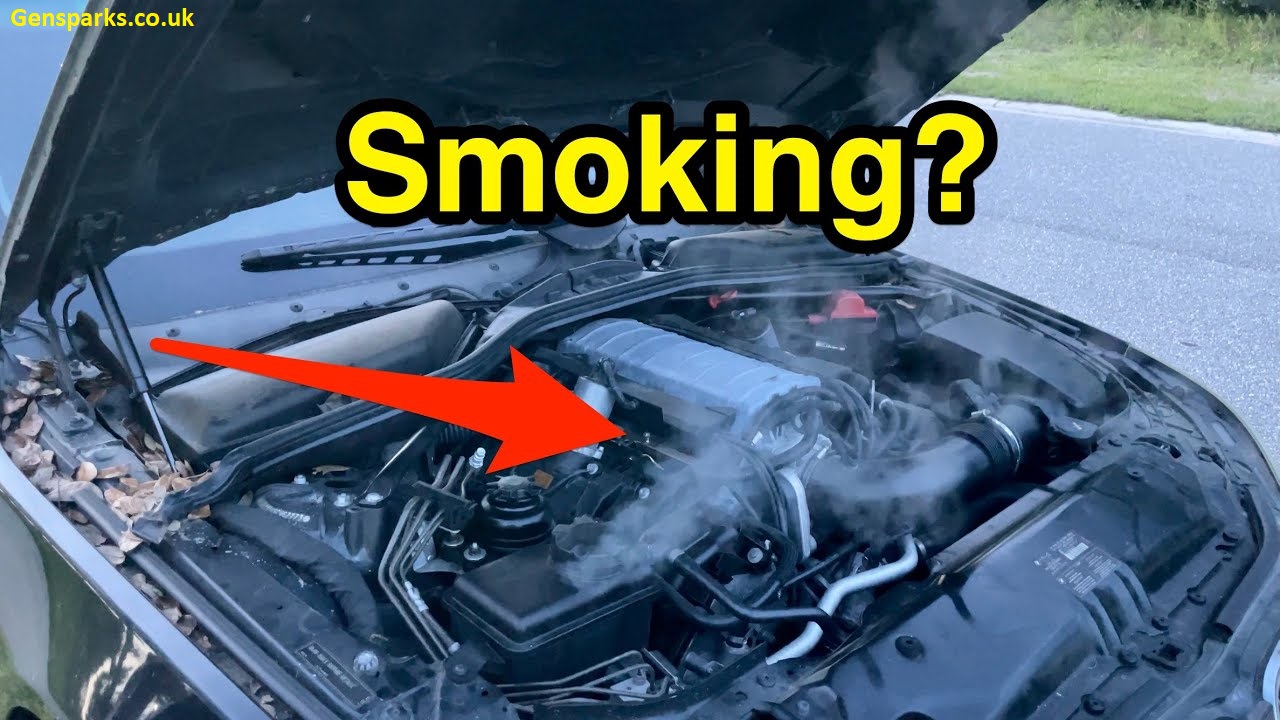

Why Is My Car Smoking? Seeing smoke coming from your car can be alarming, but understanding the cause can help you respond appropriately. The color of the smoke is the biggest clue.
White smoke often indicates burning coolant, which may point to a serious issue like a blown head gasket or a cracked engine block — you might also notice a sweet smell accompanying it.
Blue or grayish smoke typically means your engine is burning oil, usually caused by worn piston rings or failing valve seals, and your oil level may be noticeably low.
Black smoke suggests the engine is running too rich, meaning it’s burning excess fuel due to a clogged air filter, malfunctioning fuel injectors, or a faulty oxygen sensor.
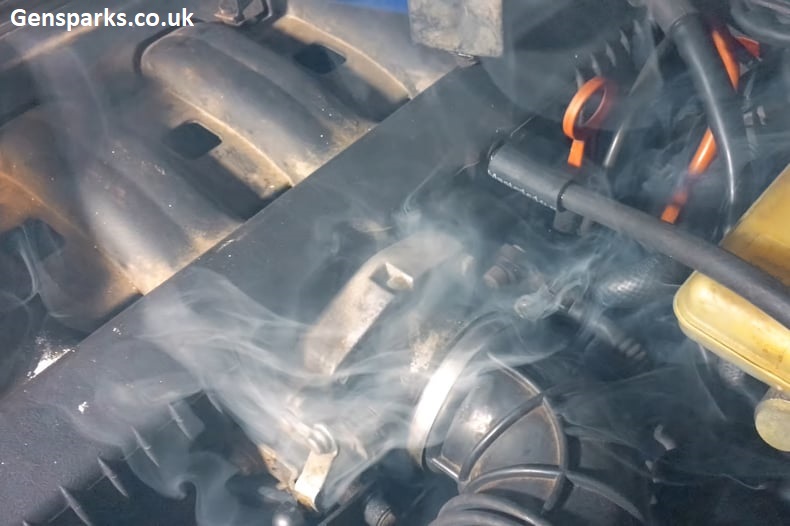
Smoke rising from under the hood, rather than the exhaust, could be the result of an overheating engine, an oil leak dripping onto hot engine parts, or a coolant leak.
Regardless of the type, smoking should never be ignored.
Pull over safely, turn off the engine, and have your vehicle inspected by a qualified mechanic as soon as possible to prevent further — and potentially costly — damage.
Table of Contents
Quick Table
| Smoke Color | Likely Cause | Urgency |
|---|---|---|
| White | Blown head gasket / coolant leak | High |
| Blue/Gray | Burning oil / worn piston rings | Medium-High |
| Black | Excess fuel / clogged air filter | Medium |
| From Hood | Overheating / oil leak on hot parts | High |
| Thin White (startup) | Normal condensation | Low |
Why Is My Car Smoking?
Seeing smoke coming from your car can be alarming, but understanding the cause can help you respond appropriately. The color of the smoke is the biggest clue.
White smoke often indicates burning coolant, which may point to a serious issue like a blown head gasket or a cracked engine block — you might also notice a sweet smell accompanying it.
Blue or grayish smoke typically means your engine is burning oil, usually caused by worn piston rings or failing valve seals, and your oil level may be noticeably low.
Black smoke suggests the engine is running too rich, meaning it’s burning excess fuel due to a clogged air filter, malfunctioning fuel injectors, or a faulty oxygen sensor.
Smoke rising from under the hood, rather than the exhaust, could be the result of an overheating engine, an oil leak dripping onto hot engine parts, or a coolant leak. Regardless of the type, smoking should never be ignored.
Pull over safely, turn off the engine, and have your vehicle inspected by a qualified mechanic as soon as possible to prevent further — and potentially costly — damage.
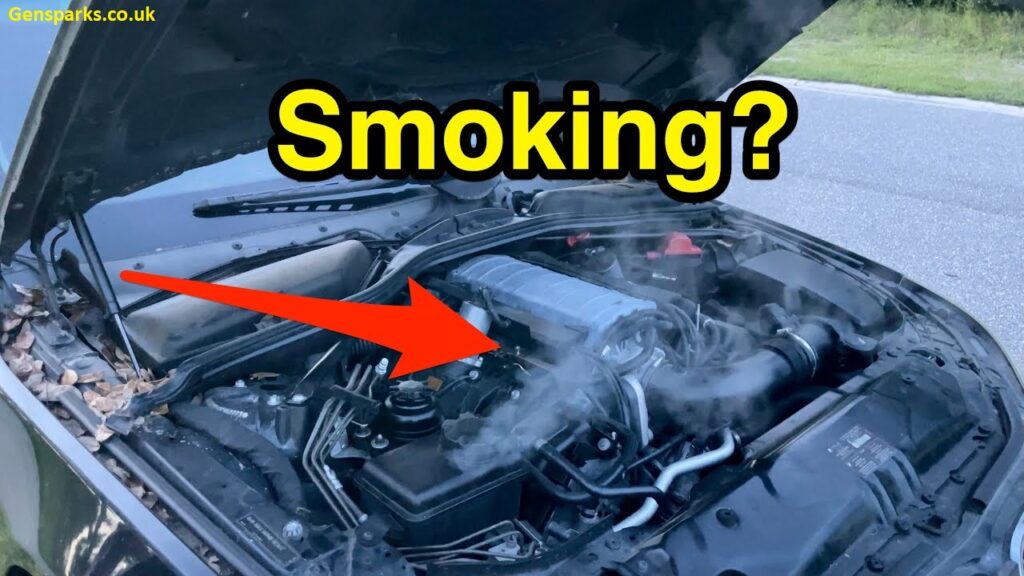
First — Don’t Panic, But Don’t Ignore It Either
The most important thing to understand is that “smoke” coming from your car isn’t always the end of the world. Sometimes it’s completely harmless.
But sometimes it absolutely is a serious problem. The trick is knowing which one you’re dealing with.
The color, the location, and the smell of the smoke are your three best clues. Get those right and you’ve already done half the diagnostic work.
Smoke color quick reference
White / Steam
Often coolant burning off. Cold morning steam = harmless. Thick plumes = serious.
Blue/Gray
Oil burning in engine. Worn seals or piston rings. Needs attention soon.
Black
Too much fuel burning. Sensor issue or fuel injector problem. Fix promptly.
White Smoke: The Most Common (and Confusing) One
White smoke is the one that trips people up the most — because it can mean almost nothing, or it can mean your engine is in real trouble.
On a cold morning, especially in winter, that thin wisp of white vapor from your exhaust pipe is just condensation burning off. Give it two minutes after the engine warms up. If it disappears? You’re fine. This is completely normal.
But if the smoke is thick, persistent, and sweet-smelling — almost like someone’s brewing antifreeze — you’re probably looking at coolant leaking into the combustion chamber.
This is what’s called a blown head gasket, and it is not something you want to drive on. My car had exactly this, and I kept going anyway because I didn’t know better.
Two days later, my engine overheated so badly that the temperature gauge pegged all the way to red.
Stop driving immediately if you see thick white smoke with a sweet smell and your temperature gauge is climbing. Continuing to drive risks warping your cylinder head — a repair that can run $2,000–$4,000+.
White smoke from the hood (not the exhaust) is a slightly different story.
That’s often coolant dripping onto a hot engine component — maybe from a cracked hose, a loose reservoir cap, or a weeping radiator. Still get it looked at, but it’s usually less catastrophic.
Blue or Gray Smoke: Your Engine Is Burning Oil
This one has a distinct smell — like something is burning, not just steaming. Blue-gray smoke from your exhaust means engine oil is getting into places it shouldn’t be and getting burned along with your fuel.
There are a few reasons this happens. Worn piston rings are one. Leaking valve stem seals are another. Both let oil slip past where it should be contained and drop into the combustion chamber.
A telltale sign? You’ll notice it most on startup when the engine is cold, or when you lift off the gas after accelerating. A quick puff of blue smoke right then is a classic symptom.
This won’t kill your car overnight, but it will over time. You’ll start going through oil faster than normal, and eventually, if enough oil is burned, your engine can run dry.
I’ve seen people ignore this for 6 months and end up needing a complete engine rebuild. Don’t do that.
Quick check: Pull your dipstick every two weeks if you’re seeing blue smoke. If your oil level is dropping noticeably between changes, you’ve confirmed the issue.
Take it to a mechanic for a compression test to narrow down the cause.
Black Smoke: Fuel Is the Problem
Black smoke means your engine is running “rich” — burning more fuel than it should. The extra unburned fuel comes out as soot. You’ll usually smell it too, that heavy fuel smell from the exhaust.
This can be caused by a stuck fuel injector pumping too much fuel, a dirty or faulty mass airflow sensor (MAF sensor) giving the engine bad data, a clogged air filter starving the engine of oxygen, or a failing oxygen sensor that’s messing up the fuel-air mixture.
Modern cars will almost always trigger a check engine light alongside black smoke. Plug in an OBD2 scanner (they’re like $25 on Amazon, and incredibly useful) and pull the codes.
Common culprits are P0172 (system too rich), P0300 series (misfires), or sensor-related codes.
Don’t skip this one because it “doesn’t feel serious.” Running rich wastes fuel, hurts performance, and can foul your catalytic converter over time — and that’s a $1,000+ repair on its own.
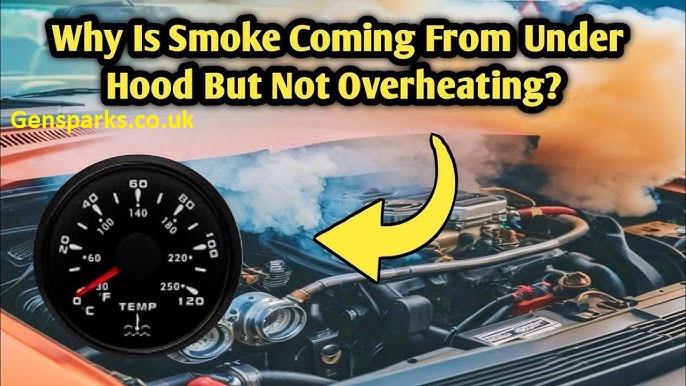
Smoke From the Engine Bay (Not the Exhaust)
This is the one that really gets your heart racing. You open the hood and there’s smoke rising from the engine itself. What’s happening?
Most of the time it’s an oil or fluid leak dripping onto a hot part — the exhaust manifold, the engine block, whatever’s closest and hottest.
Oil leaks are a common culprit. So are power steering fluid leaks, transmission fluid leaks, or even brake fluid getting onto a hot surface.
If it’s a small amount of thin smoke and you can identify a recent fluid spill (maybe you overfilled something or spilled oil during your last DIY oil change), it might just burn off.
But if it’s heavy, recurring smoke from the engine bay, that needs to be diagnosed properly. Burning oil or fluid near your exhaust system is a fire risk, and I don’t say that to be dramatic — it’s real.
Step-by-Step: What to Do When You See Smoke
- Pull over safely as soon as possible. Don’t try to “just make it home” — that’s how things go from bad to totaled.
- Turn the engine off and let it sit for at least 10–15 minutes before opening the hood. Hot coolant under pressure can cause serious burns.
- Observe the smoke: where is it coming from (exhaust vs. engine bay)? What color? What does it smell like? Take a video on your phone — it helps when explaining to a mechanic.
- Check your temperature gauge and oil warning light before you shut down. If the engine overheated, stop there — don’t restart.
- Once cool, check your coolant reservoir and oil dipstick. Low on either? That’s important information.
- Plug in an OBD2 scanner (or use a free app like Torque with a Bluetooth OBD2 dongle) to pull any fault codes.
- Based on what you find, either call a mechanic or have the car towed. Don’t drive it if it overheated, lost coolant, or the smoke was heavy and persistent.
“The two worst things you can do: panic and do nothing, or stay calm and do nothing. Pick a third option — act.”
Common Mistakes People Make
Topping off the coolant and calling it fixed without finding the actual leak. It’ll just lose fluid again and overheat.
Opening the radiator cap when the engine is hot. The pressure release can spray scalding fluid. Always wait.
Assuming white steam on a cold morning is always fine. It usually is — but always watch for the temperature gauge.
Using “stop leak” products as a permanent fix. They’re a temporary patch at best and can clog your cooling system.
Ignoring the oil burn because the car “still drives fine.” Fine now doesn’t mean fine in 3,000 miles.
Not mentioning the smoke color and smell to the mechanic. That detail cuts diagnostic time in half.
A Few Things Worth Keeping in Mind Long-Term
The honest truth? Most of these issues don’t come out of nowhere. They build up over time from skipped oil changes, ignored maintenance intervals, or running the engine a little too hot one too many times.
Keeping up with basic maintenance — fresh oil every 5,000–7,500 miles, coolant flush every 2–3 years, air filter check every 15,000 miles — prevents the vast majority of smoking scenarios before they start.
And if your car is older or high-mileage, it’s worth doing a basic fluid check every month. Literally takes four minutes.
Pop the hood, check oil level and color, peek at the coolant reservoir, glance at the brake fluid. That four minutes has saved me hundreds of dollars more than once.
FAQ’s
Is it safe to drive a smoking car?
No. You should pull over immediately and turn off the engine. Continuing to drive can cause severe engine damage or even a fire.
Why does my car smoke only when I start it?
Thin white smoke at startup is usually normal condensation burning off. If it persists after a few minutes, it could indicate an oil or coolant issue.
How much does it cost to fix a smoking car?
Costs vary widely. A simple air filter replacement may cost $20–$50, while a blown head gasket repair can run $1,000–$2,000 or more.
Can low oil cause my car to smoke?
Yes. Low or dirty oil can cause the engine to overheat and produce blue or gray smoke from the exhaust.
Why does my car smell burnt but have no visible smoke?
A burning smell without visible smoke could indicate an oil leak on hot engine parts, overheating brakes, or a slipping clutch.
Conclusion
Understanding why your car is smoking is essential for every driver.
Smoke is never something to brush off or ignore — it is your vehicle’s way of telling you that something is wrong and needs immediate attention.
Whether you notice white smoke billowing from the exhaust, blue haze trailing behind you on the road, thick black smoke indicating fuel problems, or steam rising from under the hood, each type carries its own warning and requires a different course of action.
The color, smell, and location of the smoke are all important clues that can help you — or your mechanic — diagnose the problem quickly and accurately.
Acting fast can mean the difference between a minor, affordable repair and a major engine overhaul that costs thousands of dollars.
Always make it a habit to monitor your fluid levels, including coolant, engine oil, and transmission fluid, and schedule regular maintenance checks to catch potential issues before they escalate.
If your car ever starts smoking unexpectedly, stay calm, pull over safely, and contact a trusted mechanic right away.
Taking prompt action protects not only your vehicle but also your safety and the safety of everyone around you on the road.