
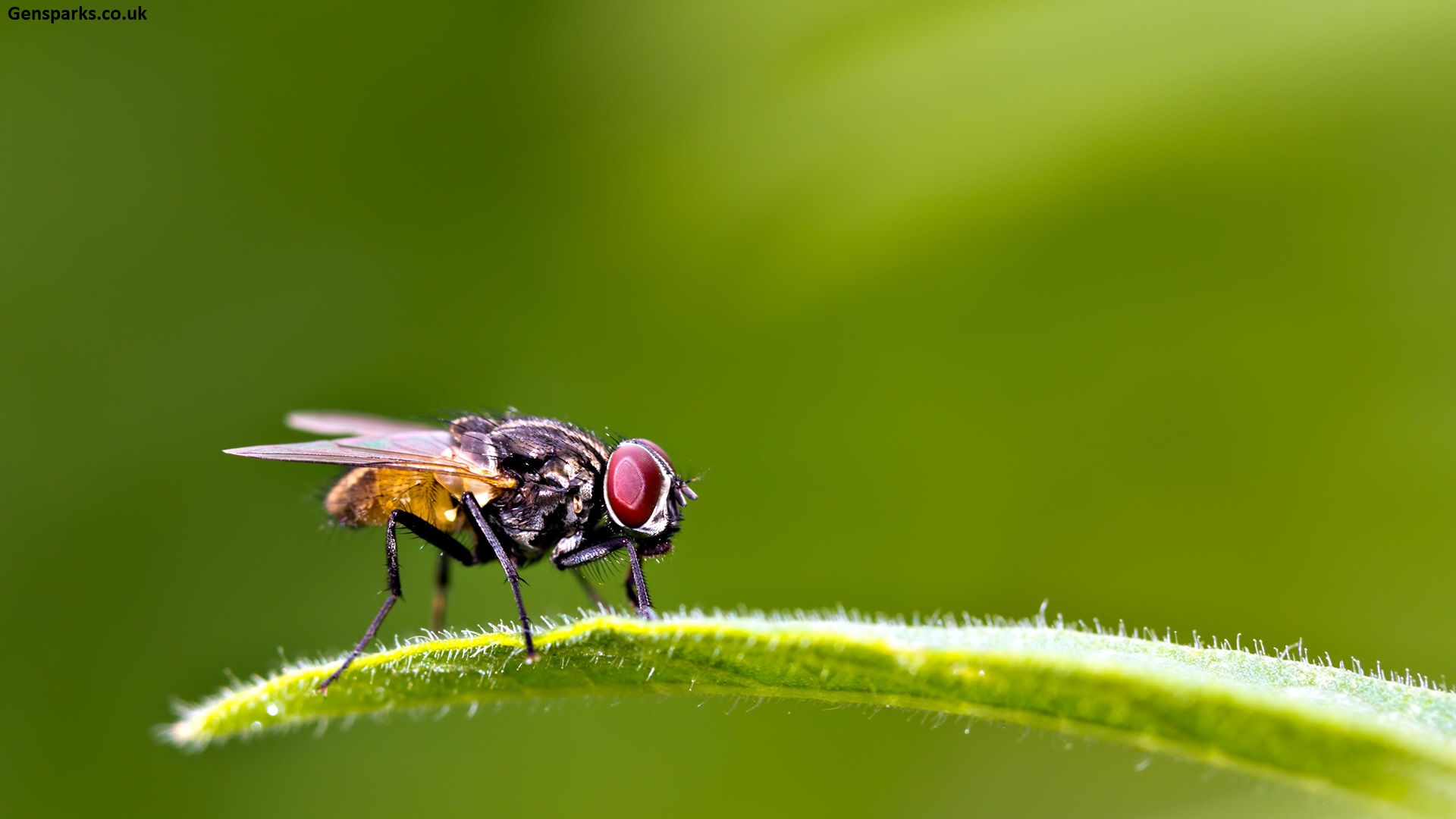

Why Are Flies So Annoying? Flies are arguably one of nature’s most irritating creatures, and for good reason.
They are hardwired to seek out food, warmth, and moisture — the exact things found in our homes and on our plates.
Their habit of landing on garbage, waste, and rotting matter before touching our food triggers a deep, instinctive disgust response.
Worse, their erratic flight patterns and lightning-fast reflexes make them nearly impossible to catch or swat, turning a simple task into a maddening chase.
The incessant buzzing sound alone puts the human brain on edge, signaling an unwanted presence nearby.
In short, flies are annoying because everything about them is designed to invade our space and resist our efforts to stop them.
Table of Contents
Quick Table
| Factor | Why It’s Annoying |
|---|---|
| Relentless pursuit | They keep coming back no matter how many times you shoo them away |
| Dirty habits | Land on garbage and waste, then on your food |
| Fast reflexes | Nearly impossible to swat or catch |
| Erratic movement | Unpredictable flight makes them hard to track |
| Buzzing sound | Triggers an alert response in the brain |
| Disease carriers | Spread bacteria like Salmonella and E. coli |
| Attracted to humans | Body heat, sweat, and food draw them in |
Why Are Flies So Annoying?
It was a Saturday afternoon. I’d just made the perfect plate of biryani — the kind that takes three hours and fills the whole house with that cardamom-and-ghee smell.
I set it on the table, turned around for literally ten seconds to grab a glass of water, and came back to find two fat houseflies doing laps around my food like they owned the kitchen.
I waved them off. They came back. I covered the plate. They hovered around the cover. I moved to the other room. One of them followed me.
That was the day I stopped pretending flies were just a minor inconvenience and started actually wanting to understand what makes them so relentlessly, infuriatingly annoying.
It’s Not Random Flies Are Specifically Designed to Drive You Crazy
Here’s the thing I didn’t realize until I looked into it: flies aren’t annoying by accident.
Almost everything that makes them unbearable is a survival feature that’s been refined over millions of years.
Let’s break it down.
Their Eyes See Everything (Except Your Hand Coming)
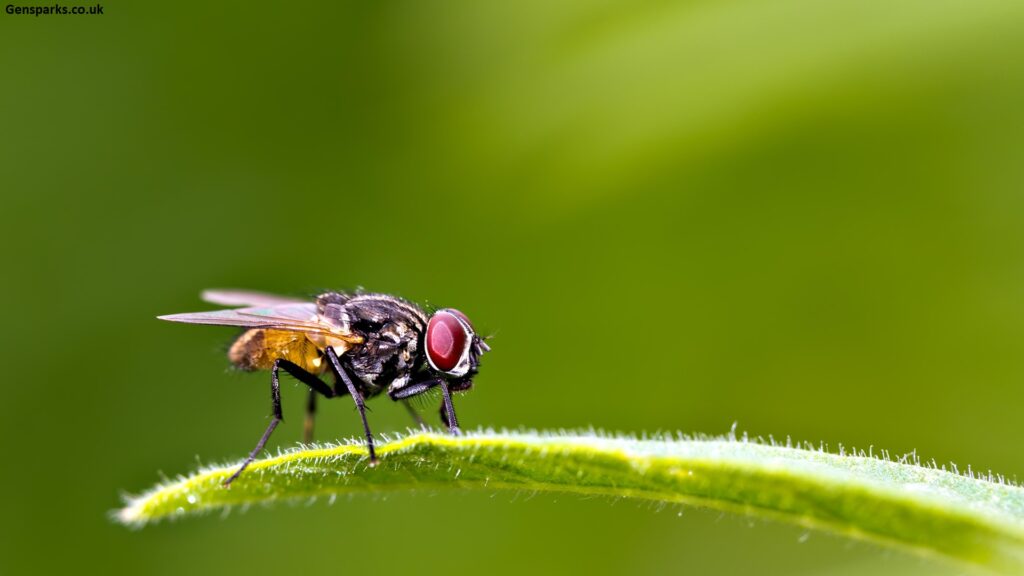
A housefly has what’s called compound eyes — they can see almost 360 degrees around them without turning their head.
So when you raise your hand to swat one, it sees you before you even commit to the motion.
They also process visual information faster than us. Their brains are wired for detecting movement. To them, your slow-motion swat is like watching a tree fall in slow motion — they have plenty of time to react.
I spent a good summer trying to clap flies between my hands mid-air. My success rate? Genuinely embarrassing. Maybe 1 in 20. My younger brother thought I was losing it.
They Keep Landing on You Because You’re Warm, Moist, and Smell Interesting
This is the part nobody wants to hear.
Flies are attracted to:
- Body heat — you’re warm, and warmth means energy
- Sweat — it’s salty and protein-rich, which is basically gourmet food for a fly
- Carbon dioxide — you exhale it with every breath, and flies can detect it from meters away
- Skin bacteria — yes, the stuff living on your skin smells attractive to them
So when a fly lands on your arm and you brush it off and it comes right back? It’s not being spiteful.
It’s being a very motivated little creature that has found a food source and doesn’t understand the concept of “personal space.”
The worst part is that when a fly lands on you, it often vomits digestive enzymes onto the surface before eating. That’s what the little rubbing of legs is partly about — it’s cleaning up after itself.
Once I learned that, every fly landing became a completely different kind of horrifying.
The Buzzing Sound Is Psychological Warfare (Sort Of)
That high-pitched drone near your ear isn’t just annoying — it’s genuinely disruptive to your nervous system.
The buzz of a fly is in the frequency range of 200–400 Hz, which happens to be a range that human hearing is highly sensitive to.
We evolved to pay attention to sounds in that range because they often signal something that matters — other animals, threats, things nearby.
So when a fly buzzes near your ear, your brain can’t fully tune it out the way it might tune out background traffic noise. It keeps pulling your attention back. It’s involuntary.
I used to work late nights trying to write, and a single fly in the room was more distracting than my phone.
The buzzing would stop, I’d relax, and then — right as I’d get back into focus — bzzzzz again. Like it had a timer set specifically to interrupt my train of thought.
Why Won’t They Just Leave?
The most maddening thing about flies is their persistence. You wave them away. They come back. You open the window. They don’t leave. You move to another room. They find you.
A few reasons this happens:
They’re not scared of you. A fly has lived its whole short life being swatted at and surviving. You waving your arm means “dodge briefly and return,” not “this place is dangerous.”
They’re following chemical signals, not making decisions. Flies don’t think “I’ll go bother that person.” They follow scent gradients — toward food, warmth, moisture. If you’re the best source of those things in the room, they’ll keep coming back until something better appears.
Their short lifespan creates urgency. A housefly lives only about 15–30 days. In that time, it needs to eat, mate, and lay eggs. That’s not a lot of time to be cautious. Everything is urgent to a fly.
The Garbage Can Problem Nobody Talks About
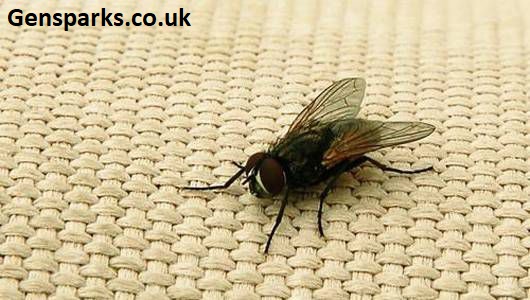
I made a mistake one summer that turned my kitchen into a fly convention. I had a small open trash bin near the counter — just a small one, I figured it was fine.
Within a week, I had a fly problem that took two weeks to fully solve.
Here’s what I didn’t know: a single female fly can lay up to 500 eggs in her lifetime, often in batches of 75–150 at a time.
And she prefers warm, moist organic material — like kitchen waste sitting in an open bin.
Those eggs hatch in 24 hours. The larvae (maggots) develop in about 3–7 days. So within a week of one fly finding your trash, you can go from 1 fly to dozens.
The fix, once I actually understood the problem:
- Switched to a bin with a tight-fitting lid
- Emptied it every single day during summer months
- Cleaned the inside of the bin with diluted vinegar weekly
- Stopped leaving any food scraps uncovered on the counter
The fly problem didn’t disappear overnight, but within about 10 days, it was basically gone.
What Actually Works to Keep Flies Away
I’ve tried a lot of things over the years. Some worked. Some were a waste of money.
What actually helped:
- Window and door screens — the single most effective thing, full stop. No screens? Flies will find every open window on a warm day.
- Essential oil sprays — flies genuinely dislike peppermint, eucalyptus, and lavender. I keep a small spray bottle of diluted peppermint oil and spray door frames and windowsills. It works surprisingly well and the house smells good.
- Electric fly swatters — much more effective than regular swatters because the grid is wider and the zap is instant. Got one off a local market for very little money. Worth it.
- Sticky fly traps — ugly but effective, especially near trash areas or kitchen windows. The kind that look like golden ribbons. Not glamorous. They work.
- Keeping things dry — flies need moisture. Fixing a leaky faucet and not leaving wet dishes out overnight reduced my fly problem noticeably.
What didn’t work as advertised:
- Most “ultrasonic pest repeller” plug-ins — I tried two different brands. Saw no difference.
- Leaving out citrus peels — I read about this trick online. The flies did not read the same article.
- The fake wasp nest bags — maybe these work in some climates, but not where I live.
A Weird Thing I’ve Come to Respect (A Little)
After going through all this research and trial and error, I landed on a grudging respect for flies that I didn’t expect.
They’ve been on this planet for over 65 million years. They survived whatever killed the dinosaurs. They exist on every continent except Antarctica. They can breed in almost any organic waste material. They can fly forward, backward, sideways, and land upside down on a ceiling.
They’re not annoying because they’re dumb. They’re annoying because they’re extremely, ruthlessly good at surviving.
Does that make them less irritating when one is doing laps around my tea? No. But it reframes it a little.
The One Habit That Changed Everything
If I had to pick one thing that made the biggest difference in my ongoing battle with flies, it’s this: treat the kitchen like flies are already looking for a reason to enter.
Meaning — don’t wait until you have a fly problem to cover food, seal the bin, wipe down the counter, and check the screens. Do it as a default habit. Flies exploit opportunities. Remove the opportunities.
My grandmother used to cover every dish the moment it came off the stove. I used to think that was excessive.
Now I do the same thing, and the flies that occasionally wander in through an open door don’t find anything worth staying for.
That’s the real answer to “why are flies so annoying” — they’re not annoying for no reason. Every annoying thing about them is a feature, not a bug.
And once you understand that, you can actually do something about it instead of just waving your arms and hoping for the best.
FAQ’s
Why do flies keep landing on me?
Flies are attracted to body heat, sweat, and the carbon dioxide we exhale. Your skin also carries natural oils and salts that flies find appealing as a food source.
Are flies actually dangerous?
Yes. Flies can carry and transmit over 100 pathogens, including Salmonella, E. coli, and typhoid, by landing on contaminated surfaces and then on your food.
Why is it so hard to swat a fly?
Flies have compound eyes that give them a near 360-degree field of vision, and their reaction time is incredibly fast — they detect threats and change direction in milliseconds.
Why do flies rub their legs together?
They are actually cleaning themselves, removing debris and particles from their legs so their sensory receptors stay sharp and functional.
What is the lifespan of a fly?
A common housefly lives roughly 28 days, but in that short time a single female can lay up to 500 eggs, making infestations grow rapidly.
Conclusion
Flies are far more than just a minor nuisance — they are a persistent, biologically sophisticated irritant that has been bothering humans for thousands of years.
Every aspect of their behavior, from their erratic flight patterns to their affinity for filth, seems perfectly designed to get under our skin.
Their ability to carry harmful bacteria and pathogens makes them not just annoying but genuinely concerning from a public health perspective.
The frustration of failing to swat one is not simply clumsiness on our part; it is a reflection of how remarkably evolved these creatures are.
Their compound eyes, lightning reflexes, and unpredictable movement give them a distinct survival advantage over us. Even their buzzing serves a purpose, helping them communicate and navigate.
While it is easy to dismiss flies as nothing more than pests, they play a role in nature as decomposers and even as pollinators in some ecosystems.
That said, inside your home and around your food, they remain unwelcome guests.
Understanding why flies behave the way they do does not make them any less irritating, but it does offer a grudging respect for just how effectively they have mastered the art of being impossibly, unavoidably annoying.