
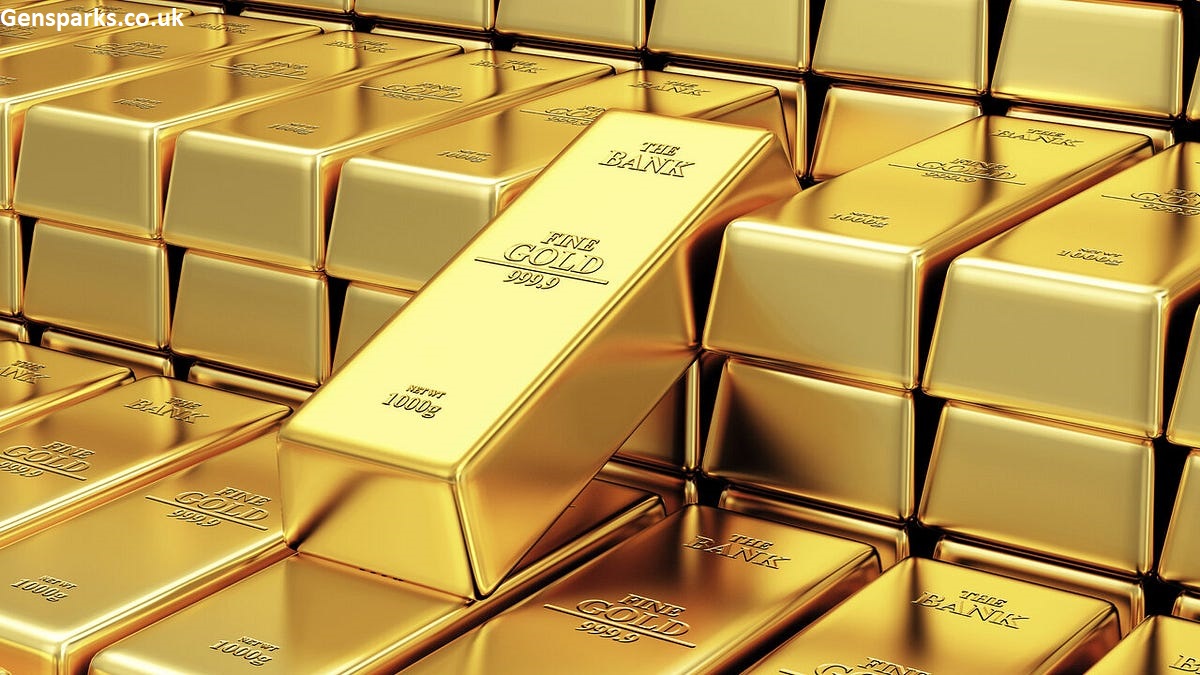

Why Is Gold So Expensive? Gold has captivated humanity for thousands of years, and its extraordinary price reflects far more than simple supply and demand.
It is genuinely rare — all the gold ever mined in human history would fit into just a few Olympic swimming pools.
Extracting it requires massive energy, expensive equipment, and significant environmental cost.
Unlike paper currency, gold cannot be printed or manufactured, giving it an inherent resistance to inflation.
Investors flood toward it during economic uncertainty, driving prices higher during crises. Its unique physical properties — indestructible, malleable, and brilliantly beautiful — make it irreplaceable in jewelry, technology, and finance.
Rarity, trust, and timelessness make gold priceless.
Table of Contents
Quick Table
| Reason | Details |
|---|---|
| Extreme Rarity | All gold ever mined fits into roughly three Olympic swimming pools, making it genuinely scarce |
| Costly Extraction | Mining gold requires heavy machinery, massive energy, and expensive operations across difficult terrain |
| Limited Supply | Gold cannot be manufactured or synthetically produced, keeping supply naturally and permanently restricted |
| Inflation Hedge | Gold holds its value when currencies weaken, making it a trusted store of wealth globally |
| High Demand | Consistent demand from jewelry, technology, central banks, and investors keeps prices persistently elevated |
| Economic Safe Haven | During recessions, wars, and crises, investors rush to gold, dramatically driving up its price |
| Central Bank Reserves | Governments worldwide hold gold as a financial backstop, absorbing large portions of global supply |
| Industrial Use | Gold is used in electronics, medical devices, and aerospace technology due to its unique properties |
| Currency Independence | Unlike paper money, gold is not tied to any government or policy, giving it universal value |
| Historical Prestige | Centuries of cultural, spiritual, and financial significance have cemented gold’s perception as the ultimate store of value |
Why Is Gold So Expensive?
I still remember the day my grandmother handed me a small gold bangle when I was about twelve. She said, “Keep this safe. One day, this will be worth more than you think.
” I nodded politely, the way kids do when they don’t really get it, and tossed it in my drawer.
Years later, I picked it up again — and out of pure curiosity, I checked its current value. That small, not-even-100-gram bangle? Worth several hundred thousand rupees. I stood there genuinely stunned.
That moment pushed me down a rabbit hole I haven’t fully climbed out of.
I started reading about gold markets, talking to jewelers, watching commodity price trackers, even sitting through some painfully dry economics videos.
And after all that, I finally have a proper answer to a question I’d been brushing off my whole life.
Gold Is Rare — But Not That Rare
The first thing most people throw at you is: “Gold is expensive because it’s rare!”
Okay, yes. But platinum is rarer. Rhodium is way rarer. And yet gold sits at the top of the cultural hierarchy of precious metals for most of human civilization.
So rarity alone doesn’t explain it.
Here’s the real picture: all the gold ever mined in human history would fill roughly 3.5 Olympic swimming pools.
That sounds like a lot until you realize we’ve been digging for thousands of years.
The total above-ground gold supply is around 200,000 tonnes, and mining adds only about 3,300 tonnes per year — which is less than 2% of the existing supply.
That slow growth in supply matters. You can’t just “print more gold.”
Governments can print currency, tech companies can create more software, but nobody is manufacturing gold in a lab at scale. That supply cap creates a natural floor under its price.
But again — rarity is just one piece.
The Work It Takes to Get Gold Out of the Ground
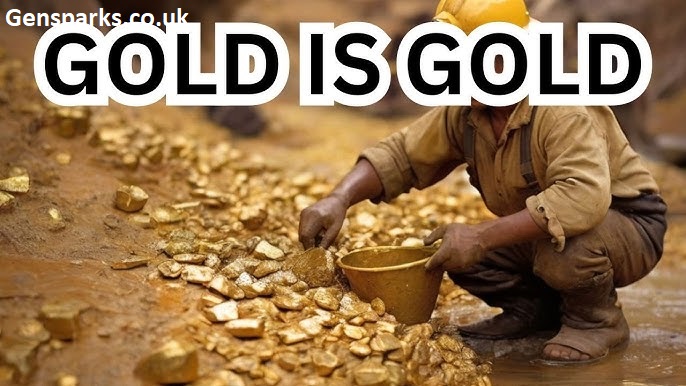
I talked to someone who works for a mid-size mining operation, and he put it bluntly: “We move mountains for grams.”
He wasn’t exaggerating. On average, you need to process about a tonne of rock to get a single gram of gold. In low-grade deposits, it can be worse — several tonnes per gram.
The machinery, fuel, labor, environmental compliance, and processing chemicals required make gold extraction genuinely expensive before it even reaches a refinery.
The cost of mining one ounce of gold varies a lot by location, but industry averages put the all-in sustaining cost (AISC) somewhere between $1,100 and $1,400 per ounce.
Since gold prices have been hovering in the $2,000–$3,000+ range recently, there’s margin — but the point is, the floor is high.
When fuel prices spike, mining gets more expensive.
When equipment fails, mining gets more expensive. When new environmental regulations hit, mining gets more expensive. All of that feeds into the end price.
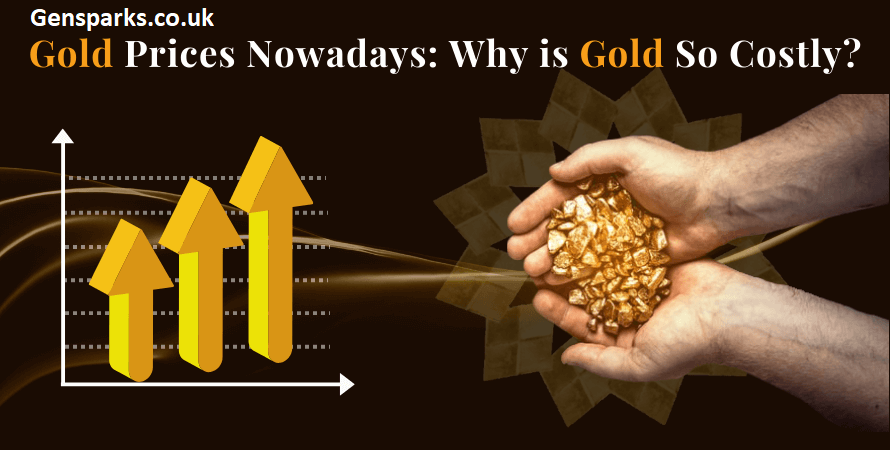
Gold Has No “Off Switch” — It Doesn’t Corrode, Rust, or Decay
Here’s something that took me a while to properly appreciate: gold is chemically boring in the best possible way.
It doesn’t rust. It doesn’t tarnish in air. It doesn’t react with most acids. A gold coin buried in the ground for 2,000 years looks almost exactly the same as the day it was struck.
This is a massive deal for a “store of value.” Imagine trying to save wheat for 50 years. Or copper — it turns green. Or iron — it rusts away. Gold just… sits there. Perfectly. Forever.
This physical permanence is why humans instinctively gravitated toward gold as money and storage of wealth long before anyone understood chemistry. It worked because it lasted.
And it still works. I have a friend who inherited gold jewelry from his great-grandmother. Aside from a few scratches, it’s physically identical to what it was a century ago.
Try doing that with a savings account balance through wars, currency collapses, and bank failures.
It’s Not Just Jewelry — Gold Is Actually Useful Tech
This one surprised me when I first dug into it.
Gold is an exceptional electrical conductor and, unlike copper or silver, it doesn’t corrode. That makes it incredibly valuable in electronics.
Every smartphone has a tiny amount of gold in it — in connectors, circuit boards, and contacts. Same goes for laptops, TVs, medical equipment, and satellites.
NASA uses gold-coated visors in astronaut helmets to reflect solar radiation. The James Webb Space Telescope’s mirrors are coated with a thin layer of gold.
Industrial and tech demand for gold adds a real consumption floor to its price. It’s not just sitting in vaults — a portion gets permanently consumed in manufacturing every year.
That consumption doesn’t come back into the market.
The Psychology Behind Gold’s Price (This Is the Big One)
Here’s where it gets really interesting — and honestly, a little mind-bending.
A huge portion of gold’s price is driven by collective human belief. That sounds fluffy, but it’s backed by data.
When people are scared — of inflation, of war, of financial collapse, of political instability — they buy gold. They’ve been doing this for thousands of years.
And because everyone knows that everyone else will do this when scared, it becomes a self-fulfilling prophecy.
Gold spiked after 9/11. It spiked during the 2008 financial crisis. It spiked during COVID. It spiked when inflation hit multi-decade highs in 2022–2023. Each time the world got shaky, gold got more expensive.
This “safe haven” status is baked into human financial behavior so deeply that it’s essentially structural.
Central banks around the world hold thousands of tonnes of gold in their reserves — not because gold “does” anything economically, but because it’s trusted when nothing else is.
The United States holds over 8,000 tonnes. Germany, Italy, France, China — all holding massive reserves. When the institutions that run global finance treat gold as a backup plan, that tells you something.
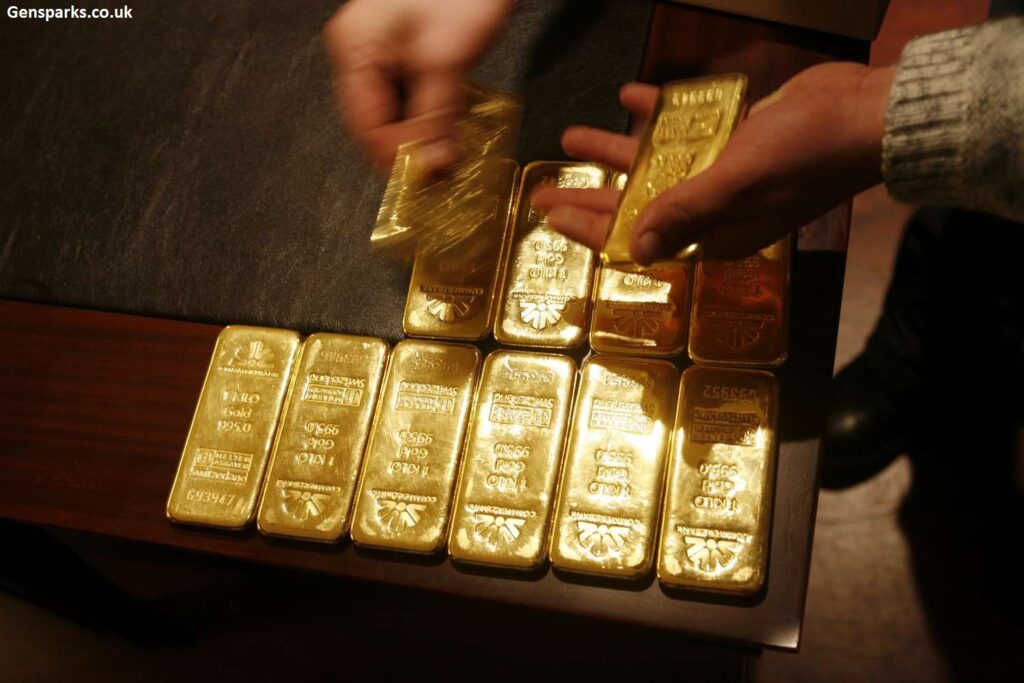
Interest Rates and the Gold Price Connection
One thing I got wrong for a long time: I thought gold and the stock market just moved opposite each other. Buy stocks when markets are good, buy gold when they’re bad. Simple.
Reality is messier.
The real driver is real interest rates (nominal interest rates minus inflation). Here’s why:
Gold doesn’t pay dividends. It doesn’t pay interest. It just sits there. So when interest rates are high and inflation is low, there’s a real “opportunity cost” to holding gold — your money could be in a bond earning solid returns.
But when interest rates are low or inflation is high (especially when real rates go negative), gold becomes far more attractive.
You’re not “missing out” on anything by holding it, and it might protect your purchasing power better than cash.
This is why gold shot to record highs when the Federal Reserve slashed interest rates to near-zero and inflation surged in 2021–2022. The math suddenly favored gold over bonds and savings accounts.
Tracking this relationship honestly made me better at understanding why gold prices move — and why people who say “gold is always a good investment” are only sometimes right.
Common Mistakes People Make When Thinking About Gold
Treating gold as a get-rich-quick asset. Gold is historically terrible for that. Over very long periods, gold roughly keeps pace with inflation. It’s a wealth preserver, not a wealth grower.
Buying gold jewelry as an investment. Jewelry carries massive making charges, design premiums, and sometimes impure alloys. If you want investment-grade gold, look at coins (like Sovereigns or Maple Leafs), bars, or Gold ETFs like Sovereign Gold Bonds in India or GLD in the US.
Panic-buying during a spike. The worst time to buy gold is when it’s on the news every day for hitting new highs. That’s usually when everyone’s already bought and the smart money is looking to exit.
Forgetting storage and insurance costs. Physical gold requires secure storage. A locker costs money. Insurance costs money. These eat into returns over time — another reason many investors prefer digital/paper gold.
What’s Keeping Gold Expensive Right Now
As of mid-2025, gold is trading near or above all-time highs in many currencies. A few reasons for this:
- Central banks — especially from China, India, and emerging markets — have been aggressively buying gold to reduce dependence on the US dollar.
- Geopolitical uncertainty (Middle East tensions, Ukraine war, US-China friction) keeps safe-haven demand elevated.
- The US dollar’s dominance in global trade is being questioned more seriously than it has been in decades, and gold is a natural alternative.
- Retail investors worldwide now have easy access to gold through apps like Zerodha (in India), Robinhood, or ETF platforms — so demand has broadened significantly.
My Honest Take on Gold
Gold is expensive because it’s rare, difficult to produce, chemically permanent, industrially useful, and most importantly — trusted by billions of people across thousands of years as a store of value.
That last part is underrated. A lot of what makes something “valuable” is collective agreement.
The difference with gold is that this agreement has survived every empire, currency, war, and economic system humans have ever thrown at it.
My grandmother didn’t have a Bloomberg terminal or a finance degree. She just knew, the way generations before her knew, that gold holds its ground when everything else gets shaky.
FAQ’s
Why does gold price rise during economic crises?
During recessions, wars, or financial uncertainty, investors lose confidence in stocks, currencies, and other volatile assets. Gold is viewed as a stable, universally accepted store of value that governments cannot devalue or print, making it the go-to safe haven asset when everything else feels uncertain and unpredictable.
Is gold actually rare enough to justify its price?
Yes. Gold is genuinely scarce in the earth’s crust, and extracting it is extraordinarily difficult and expensive. Annual global gold mining production is relatively modest, and unlike most commodities, gold is nearly indestructible, meaning old supply never truly disappears — it simply changes hands over centuries.
Why is gold used in electronics and technology?
Gold is an exceptional electrical conductor that does not corrode or tarnish over time. This makes it ideal for critical connections in smartphones, computers, satellites, and medical devices where reliability is non-negotiable. Even tiny amounts of gold in electronics justify the cost given its unmatched performance and longevity.
Could gold ever lose its value?
While no asset is entirely immune to value shifts, gold has maintained its worth across thousands of years and countless civilizations. Its combination of rarity, physical durability, universal recognition, and cultural significance makes a complete collapse in value extraordinarily unlikely compared to any paper currency or digital asset.
Why do central banks hold gold reserves?
Central banks hold gold as a financial safety net that exists independently of any single currency or government. It provides stability to national economies, signals financial credibility to global markets, and serves as an emergency reserve during currency crises, making it a cornerstone of international monetary strategy worldwide.
Conclusion
Gold’s extraordinary price is not a mystery or a market quirk — it is the logical conclusion of thousands of years of human history, geological reality, and economic psychology converging on a single, shimmering element.
From the ancient Egyptians who buried it with their pharaohs to the modern investor who buys it during a stock market crash, gold has never lost its grip on the human imagination or the global economy.
It represents something deeper than wealth — it represents permanence in a world of constant change.
Paper currencies rise and fall, governments come and go, technologies become obsolete, but gold endures.
Its physical properties are extraordinary — resistant to corrosion, infinitely malleable, and uniquely beautiful — but its real power lies in the unspoken agreement shared across every culture and every era that gold means something.
That collective belief, reinforced over millennia, is perhaps the most powerful economic force on earth.
As long as uncertainty exists in the world — and it always will — gold will remain the instinctive refuge of individuals, institutions, and nations alike. Expensive?
Absolutely. But for something that has outlasted every empire, currency, and crisis in recorded human history, the price begins to make perfect sense.